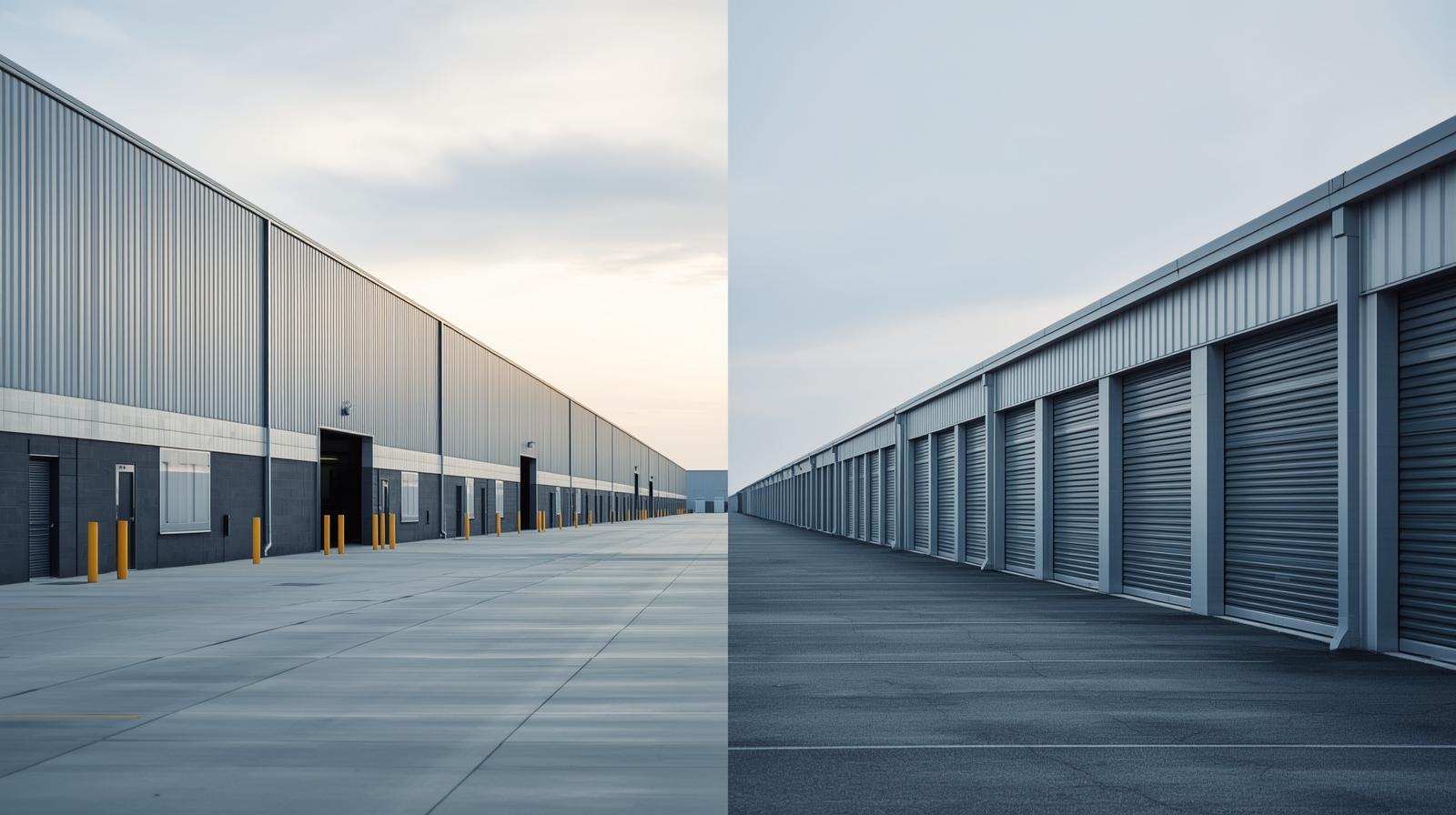
Industrial vs. Self-Storage: Two Asset Classes, Two Stress Profiles
Industrial and self-storage are often categorized together under the umbrella of operationally resilient real assets. Both benefit from tangible demand drivers. Both can perform well in stable or expansionary environments. But resilience is not a label — it is a function of stress response.
Industrial real estate typically includes warehousing, logistics, and distribution infrastructure. Leases often extend multiple years, providing contractual income visibility. That structure can create stability, particularly when tenant credit is strong and renewal cycles are staggered.
However, longer leases introduce rollover concentration risk. Fewer tenants per building means income durability depends heavily on individual tenant performance. If refinancing conditions tighten during a major lease expiration window, stress can emerge quickly. The key variable is not occupancy during growth cycles — it is renewal risk under constrained capital markets.
Self-storage operates on a different structure. Lease terms are typically short, often month-to-month. That creates pricing agility. Operators can adjust rents more quickly in response to demand or inflation shifts. Revenue diversification across hundreds of renters reduces single-tenant credit exposure.
But short-term leases introduce occupancy volatility. Performance becomes more sensitive to behavioral churn and local economic stress. Operational execution — marketing discipline, cost management, demand monitoring — becomes a primary performance driver. Diversification reduces concentration risk but increases reliance on operator capability.
Supply elasticity differs as well. Industrial development depends on land availability, zoning restrictions, and capital intensity. Barriers can support longer-term rent durability. Self-storage, by contrast, can scale more quickly in permissive markets, potentially compressing pricing power if development accelerates late in the cycle.
From an allocation perspective, the tradeoff becomes clearer:
Industrial offers contractual visibility with tenant concentration sensitivity.
Self-storage offers pricing flexibility with operational dependency.
Neither is inherently superior. Each expresses risk along different vectors — rollover concentration versus occupancy churn, credit exposure versus marketing execution, development constraints versus supply elasticity.
Before discussing upside, downside behavior deserves modeling. What happens if capital remains locked longer than expected? How exposed is cash flow to refinancing? Who absorbs pressure first — investor, operator, or lender?
The more durable allocation question is not “Which performs better?” but “Which aligns with your structural constraints?”
Resilience reveals itself under stress — not in cooperative markets.